When the Roses Bloom

In New York, roses arrive just as the city begins to soften.
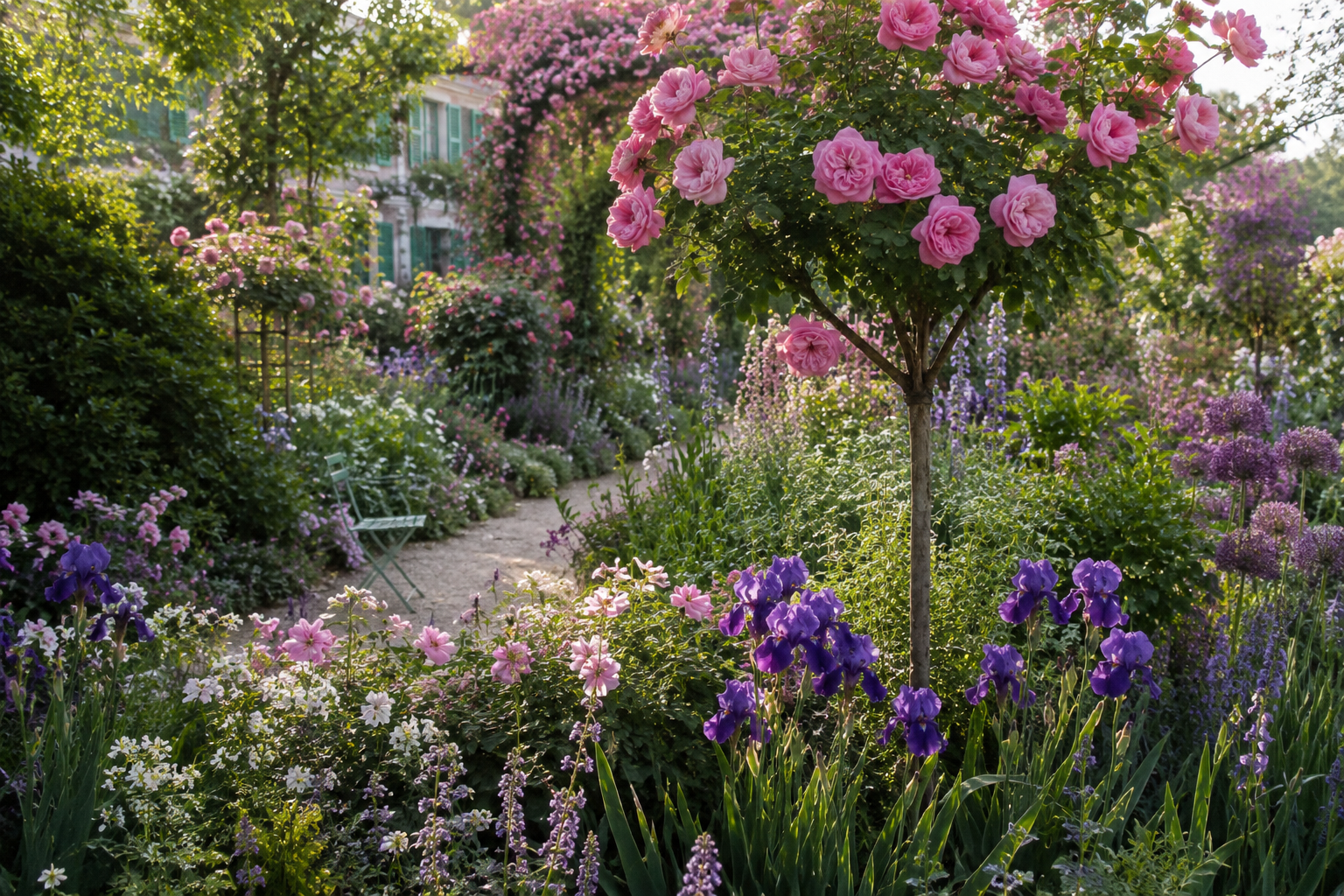
By June, the air changes. Windows stay open later. The parks grow heavy with green. Along brownstone gardens and hidden courtyards, the first roses begin to bloom—briefly transforming even the busiest streets into something gentler, slower, almost European in spirit.
There is something remarkable about the rose’s ability to belong equally to grandeur and intimacy. It grows in palace gardens and roadside fences, in carefully tended estates and small city terraces. It has long symbolized love, beauty, secrecy, devotion, excess, fragility, and power—sometimes all at once.
Perhaps this is why humanity has never stopped returning to it.
At Deux Pigeons, roses appear throughout the collection not simply as decoration, but as atmosphere. Hand-embroidered onto cotton shorts and soft tops, they feel slightly nostalgic, as though discovered in a forgotten summer wardrobe. Painted carefully onto ceramic plates along the shores of Italy, they bring something old-world and deeply romantic to the table.
The rose has always traveled easily between fashion, art, and domestic life.
For centuries, roses appeared in embroidered trousseaus, painted porcelain, handwritten love letters, wallpapered salons, and garden parties that stretched late into the evening. They were symbols of refinement, but also of emotion. A rose was never entirely neutral. To give one, or to wear one, always meant something.
In Victorian England, entire conversations were conducted through flowers. Pale pink roses symbolized admiration and grace. White roses suggested innocence and remembrance. Deep red roses became synonymous with passion and enduring love. Even today, roses remain one of the few flowers that carry nearly universal emotional meaning.
But beyond symbolism, roses endure because they engage every sense.
They are visual, of course — the unfurling layers, the impossible softness of their petals — but also deeply tied to memory. The scent of roses lingers in a way few flowers do. One encounter can immediately transport someone to a grandmother’s garden, a wedding table, a childhood summer, a city park after rain.
A friend once told me that her grandmother judged every house she visited by whether there were roses nearby. “A home without roses,” she would say dramatically, “is a home that has forgotten how to flirt.” She kept climbing roses outside her kitchen window well into her eighties and refused to cut them too neatly because, in her words, “Perfect gardens are for people who don’t actually live in them.”
That sentiment feels especially important now.
Modern life often asks for efficiency, minimalism, and restraint. Roses resist all three. They are layered, fragrant, excessive in the best possible way. They bloom unapologetically. To love roses is, in some small sense, to embrace beauty that exists simply because beauty matters.
Some of the world’s most beloved gardens were built around this idea. The rose gardens at Château de Versailles in France remain symbols of cultivated grandeur. England’s famous David Austin Rose Gardens blur the line between wilderness and refinement. The Peggy Rockefeller Rose Garden at the New York Botanical Garden transforms each June into a living archive of color and perfume. And in Rome, the Roseto Comunale blooms against the backdrop of ancient architecture, reminding visitors that roses have outlasted empires, trends, and centuries of changing taste.
Women throughout history have been equally devoted to them.
Empress Joséphine Bonaparte cultivated one of the most influential rose gardens in history at Malmaison, obsessively collecting rare varieties from across Europe. Christian Dior adored roses so deeply that he considered them his lucky flower and filled both his gardens and designs with their influence. Writer Vita Sackville-West built romantic, overflowing rose gardens at Sissinghurst Castle that continue to inspire gardeners today.
There is a common thread among women who love roses. They tend to understand that beauty is not frivolous. It shapes mood, memory, and daily life.
This is perhaps why roses feel so naturally at home in objects meant to be lived with.
Atmosphere, after all, is what romance is made from.
Every summer the rose returns. Not because they must, but because we continue to make space for them.
And maybe that is what elegance truly is: the decision to keep welcoming beauty back into our lives, again and again.
(Click here to see our handpainted rose dinnerware collection.)